Friday, 13 December 2013
How to make video look like film (final cut)
http://final-cut-studio.wonderhowto.com/how-to/make-film-like-digital-video-with-final-cut-express-384916/

Thursday, 12 December 2013
Reshoots
Close Ups
For our title sequence, we need to film some close ups to break up all the long shots that we have used.
For our title sequence, we need to film some close ups to break up all the long shots that we have used.
Thursday, 5 December 2013
Issue with filming
We couldn't start filming today as the wether is really windy and it would be dangerous for us to do filming. We are going to carry on with blogger today to make sure that we have substantial amount of posts.
We will need to make sure that we let the shop assistant know and give her notice that we will be filming today.
We will need to make sure that we let the shop assistant know and give her notice that we will be filming today.
Research into more posters


The different posters have different audience set for them. It depends on the movie as well as the place where the poster will be shown. One movie can have more than one poster.
Monday, 2 December 2013
Time Lapse Test
We intend on using the same effects on our final timelapse that we will use in our film.
Time Lapse Research
Because we need to show progression of time between the robbery and the aftermath scenes as the robbery takes place during the day and the aftermath takes place during the evening, we thought about using a time lapse to show this.
A time lapse is a act of speeding up a long-lengthed shot to emphasise the passage of time.
There are many conventional uses of time lapses. Some of these are time-lapses of clouds and the sun, showing the fast movement of the clouds, which an audience would fail to notice if played at a normal speed.
We were influenced by breaking bad in this decision as that TV show utilizes time lapses to show the progression of time.
A time lapse is a act of speeding up a long-lengthed shot to emphasise the passage of time.
There are many conventional uses of time lapses. Some of these are time-lapses of clouds and the sun, showing the fast movement of the clouds, which an audience would fail to notice if played at a normal speed.
We were influenced by breaking bad in this decision as that TV show utilizes time lapses to show the progression of time.
Friday, 29 November 2013
First Day of Filming
Today we have completed our first day of filming. We captured 3 possible shots that we intend on using for our title sequence.
We filmed the barnsley skyline as an establishing shot, along with two long shots of the Town Hall and of a busy junction.
We used these shots because we think they establish the setting well.
We plan on using a soundtrack to partner these shots in the title credits.
We filmed the barnsley skyline as an establishing shot, along with two long shots of the Town Hall and of a busy junction.
We used these shots because we think they establish the setting well.
We plan on using a soundtrack to partner these shots in the title credits.
Thursday, 28 November 2013
Film Grading in our Film
In our film I think we should try and achieve a cold, gritty aesthetic when we grade our films in Final Cut. I think this because it is conventional for British films to do this. Also, I think colder colours would create a grittier atmosphere which is what we need for our urban crime film.
Examples of British films which colder colours in their film that inspired us to make this decision are Children of Men and Tinker Tailor Solider Spy
Examples of British films which colder colours in their film that inspired us to make this decision are Children of Men and Tinker Tailor Solider Spy
 |
| Children of Men has a brown look to it, emphasising the bleak atmosphere of the film. |
 |
| Tinker Tailor Soldier Spy also uses colour grading to create a 'blue' aesthetic. |
Film Grading
Film / Colour grading is the process of altering the colours in a video to make a more conventional aesthetic. Colour correction can change the atmosphere and feel of a film in more ways than one. A 'gritty' feel can be used by making the film look darker and using colder colours. Film grading can also be used to make shot's colours look less washed out by increasing contrast or saturation.

Since the late 90s digital intermediate was used to achieve this process. The first hollywood feature film to use this technology was 'O Brother, Where Art Thou' in 2000 where Rodger Deakins could create a 'dustbowl-depression' aesthetic. The first European feature film to use DI was Chicken Run. Initially it was an expensive process when applying DI to film (around $200,000 for a feature film 10 years ago) but since digital technology used in filming has become more widespread in film, DI is more accessible.

There are some opposition to DI, though. Some people dislike the 'blue tint' that appears in many films, such as the newer Die Hards that look nothing like the first films.
Most notably, Christopher Nolan is also against DI, claiming that there is no reason to. He hasn't used it in any of his films. Janus Kiminski, Steven Spielberg's cinematographer didn't use DI on War Horse, claiming that he and Spielberg 'make the movie on set' and that they 'do not create the look of the movie in DI'

Since the late 90s digital intermediate was used to achieve this process. The first hollywood feature film to use this technology was 'O Brother, Where Art Thou' in 2000 where Rodger Deakins could create a 'dustbowl-depression' aesthetic. The first European feature film to use DI was Chicken Run. Initially it was an expensive process when applying DI to film (around $200,000 for a feature film 10 years ago) but since digital technology used in filming has become more widespread in film, DI is more accessible.

There are some opposition to DI, though. Some people dislike the 'blue tint' that appears in many films, such as the newer Die Hards that look nothing like the first films.
 |
| The newer Die Hard Films achieved a 'blue tint' look because of DI. It contrasts with the warmer looking colours that appear in the first Die Hards. |
Most notably, Christopher Nolan is also against DI, claiming that there is no reason to. He hasn't used it in any of his films. Janus Kiminski, Steven Spielberg's cinematographer didn't use DI on War Horse, claiming that he and Spielberg 'make the movie on set' and that they 'do not create the look of the movie in DI'
Film Radio Adverts Research
Advertising a film by creating a radio advert is a unique means of promotion because you can't use visuals / images of a film to promote it. All promotion is done by use of sound. Because of this, a successful radio advert needs to give details on the film's plot, as well as replicating the film's atmosphere to engage the audience.

Radio advertising is also somewhat more cost effective than traditional means of advertising (such as TV advertisements), making it more effective for independent / small budget films to use in order to reach a larger audience.
Also, because our specific target audience is a northern English audience, we could use local radio stations such as Dearne FM or Hallam FM to reach more of our target audience.


Radio advertising is also somewhat more cost effective than traditional means of advertising (such as TV advertisements), making it more effective for independent / small budget films to use in order to reach a larger audience.
Also, because our specific target audience is a northern English audience, we could use local radio stations such as Dearne FM or Hallam FM to reach more of our target audience.

Title Sequence Planning
To create our title sequence we need to have a list of shots that would accompany our title text. We need to have a series of establishing shots to set the scene, as well as some shots that could help to introduce our story.
'_________ presents' Establishing shot of Barnsley skyline
'a __________ film' Establishing shot of Town Hall
'Soundtrack by _____' Shot of roundabout
'Staring' long shot of alley
'actor1' trunk shot
'actor2' trunk shot
'Hit and Miss' black screen after trunk shot
'_________ presents' Establishing shot of Barnsley skyline
'a __________ film' Establishing shot of Town Hall
'Soundtrack by _____' Shot of roundabout
'Staring' long shot of alley
'actor1' trunk shot
'actor2' trunk shot
'Hit and Miss' black screen after trunk shot
Monday, 25 November 2013
How to design a movie poster.
Poster design tips:
- design the poster to make who ever is looking at it want to see the film (perhaps poorly worded) by this I mean don't design it to look like a work of art but something that will catch peoples eye and temp their minds.
- make the title big and clear in order to partially achieve first point. don't use fonts or colours that stop the title from popping out.
- make sure that everything that we put on the poster is what you imagined it to be. e.g. if we decide that we don't think the title will fit the poster then we could change it.
- stick to generic conventions. don't stray too far from what makes the poster look like it fits the films genre.
- don't feature the actors (show their faces) in the poster because no one will take notice of who is in it if the film is independent.
- go for a single strong image that effectively conveys the films central idea or conflict. same as before the actors needn't be mentioned
- avoid using too many colours. only use 2 or 3 colours, not including shades, to create a bold image.
Research into viral advertising ideas
My ideas for viral advertising will be first frame a friend which will be a crime scene of a shop made into a cctv with a option to insert a photo of a friends face. This will look like they are being court robbing a shop. This message will be send to few emails of my friend and they are going to send it along. This is a snowball effect.


As I dont have many emails i will email only few people. Those few people will send it along and then they will do it again. This will mean the advertising will be done by people other than our group members which again will give time for us to film.
Friday, 22 November 2013
How to make video look like film
I have researched some methods used to make shooting in video look like film. from what I've found we should:
• Not use the sharpness setting as it gives the film
an artificial, electronic look.
• Shoot test footage of the same subject
with exactly the same lighting, using a different gamma setting each time. Then
you can choose which setting produces the look we want.
• We should consider using cinelook, if
the cameras we use feature it
• We should shoot at the slowest shutter
speed which is 1/30th or 1/60th of a second, but we could consider shooting at
1/120th of a second but I am unaware if our cameras can do that.
There are
many more tips on the website I found these on but here’s the first few that
appeared. More at:
http://www.lavideofilmmaker.com/dv-film-look/how-to-make-digital-video-look-like-film.html
Thursday, 21 November 2013
Research Into Editing Techniques
There are many different editing techniques that are used in films that create different effects / atmospheres.
Elliptical Editing
This is the process of cutting out the unnecessary parts in a sequence, showing the audience the parts of the scene that they need to know.
For example, if you were to show somebody getting ready and going to work, it would take a long time. You would have to show the man waking up, getting ready, leaving the house, locking the house, getting in his car, driving all the way to work, parking his car, walking to work and arriving at work.
If you were to use elliptical editing to show this process, you could use a series of cuts and transitions to speed up this process. For example, you could show a quick shot of the man waking up, followed by a quick shot of him getting ready, leaving the house and getting in his car followed by a fade out and then a fade in transition and then him arriving at work in his car.
Continuity Editing
Continuity Editing is the editing style that is most frequently used in western films. It is used to smoothen the narrative progression between shots.
There are several ways in which a film achieves this.
Firstly a film can obey the 180 degree line rule so that an audience isn't disorientated between shots. The 180 degree line is the prevention of a camera from 'crossing an imaginary line' that establishes the positions of the subjects in a scene.
Another way in which continuity editing can be achieved is by using an eyeline match. An eyeline match shows a character looking at something out of shot, followed by a shot of the thing that they're looking at.
Cross-Cutting
Cross-Cutting is the process of establishing different events occurring simultaneously. It helps to create suspense by building up to an event. This technique is normally achieved by cutting from one piece of action to another.
The most famous scene that utilized this editing technique is in The Godfather during the baptism scene. Cross-cutting helps to juxtapose the two events.
Elliptical Editing
This is the process of cutting out the unnecessary parts in a sequence, showing the audience the parts of the scene that they need to know.
For example, if you were to show somebody getting ready and going to work, it would take a long time. You would have to show the man waking up, getting ready, leaving the house, locking the house, getting in his car, driving all the way to work, parking his car, walking to work and arriving at work.
If you were to use elliptical editing to show this process, you could use a series of cuts and transitions to speed up this process. For example, you could show a quick shot of the man waking up, followed by a quick shot of him getting ready, leaving the house and getting in his car followed by a fade out and then a fade in transition and then him arriving at work in his car.
This is an example of elliptical editing that takes place in Batman Begins. This scene is shortened into a short sequence.
Continuity Editing
Continuity Editing is the editing style that is most frequently used in western films. It is used to smoothen the narrative progression between shots.
There are several ways in which a film achieves this.
Firstly a film can obey the 180 degree line rule so that an audience isn't disorientated between shots. The 180 degree line is the prevention of a camera from 'crossing an imaginary line' that establishes the positions of the subjects in a scene.
Another way in which continuity editing can be achieved is by using an eyeline match. An eyeline match shows a character looking at something out of shot, followed by a shot of the thing that they're looking at.
Cross-Cutting
Cross-Cutting is the process of establishing different events occurring simultaneously. It helps to create suspense by building up to an event. This technique is normally achieved by cutting from one piece of action to another.
The most famous scene that utilized this editing technique is in The Godfather during the baptism scene. Cross-cutting helps to juxtapose the two events.
Radio advertising research
radio advertising is, as the name suggests, advertising using the medium of radio and usually consists of sound clips from the film mixed with a voice actor giving a basic summery of the films plot.
radio advertising is rarely used for films in the digital age as there is no visual element to interest the viewer with special effects or any kind of visual element. However the fact that there are no visuals may say more if someone hears the radio advert and are still interested in seeing the film then the film could be praised because it has been well written. in addition to this people believe that having to listen to adverts on the radio is a fair deal to being able to listen to it for free so it may be worth while considering doing this.
it is likely that our film would have a radio advert as hypothetically, our film would have low funding and putting an advert on the radio is a fairly low cost form of advertising.
as far as creating a radio advert of our own it is within the realms of possibility. as we would just have to create a script for the voice over and then record one of us reading the script aloud.
if anyone can find a decent example online then can you direct it to me as I cannot find one at all.
radio advertising is rarely used for films in the digital age as there is no visual element to interest the viewer with special effects or any kind of visual element. However the fact that there are no visuals may say more if someone hears the radio advert and are still interested in seeing the film then the film could be praised because it has been well written. in addition to this people believe that having to listen to adverts on the radio is a fair deal to being able to listen to it for free so it may be worth while considering doing this.
it is likely that our film would have a radio advert as hypothetically, our film would have low funding and putting an advert on the radio is a fairly low cost form of advertising.
as far as creating a radio advert of our own it is within the realms of possibility. as we would just have to create a script for the voice over and then record one of us reading the script aloud.
if anyone can find a decent example online then can you direct it to me as I cannot find one at all.
Ideas for a Viral Ad
To increase awareness around our film, we need to create a viral advert that promotes our film.
I have came up with a list of possible ideas for a viral ad:


I have came up with a list of possible ideas for a viral ad:
- Wanted Poster - Because our film is a crime film that takes place around a heist, I think a wanted poster showing the criminals who performed the heist and details surrounding them whilst subtly giving details around the film could be a good idea for a viral advert. Also, because its in a poster format, it would allow them to be easily distributed.

- Crimewatch Ad - I think if we created a pastiche of a BBC Crimewatch extract appealing for information around a heist that took place in Barnsley it would be a good way of raising awareness about our film, especially in Barnsley.

Monday, 18 November 2013
Character profile 2
Character profile

Name- Richard Head
Nickname- Boss
Age-19
Gender-Male
Occupation- Unemployed
Appearance- partly through growing a beard. Wears a hoodie and trackies. Has a messy, long untidy hair. Has a weird walk and messes around all the time. Often don't watch his mouth and says stuff he shouldn't.
Personality traits- He is a compulsive liar. Makes everything into a joke and doesn't care about his life. Has been brought up in a poor family where both parents left him at a young age.
Function in the narrative- In our movie he is very active and robs the shop with another person. He messes stuff up and never takes anything seriously. He is going to mess up and lead to a fight break though both of the robbers.
Character profile1

Character profile
Name- Richard Head
Nickname- Rookie
Age-19
Gender-Male
Occupation- Unemployed
Appearance- partly through growing a beard. Wears a hoodie and trackies. Has a messy, long untidy hair. Has a weird walk and messes around all the time. Often don't watch his mouth and says stuff he shouldn't.
Personality traits- He is a compulsive liar. Makes everything into a joke and doesn't care about his life. Has been brought up in a poor family where both parents left him at a young age.
Function in the narrative- In our movie he is very active and robs the shop with another person. He messes stuff up and never takes anything seriously. He is going to mess up and lead to a fight break though both of the robbers.
Extra scene ideas
looking at the amount of time that we have in the film, we should think about adding in some extra scenes. for example, a scene where i walk along and look into the shop and then run beginning to walk away hastily.
if any one has any other ideas for extra scenes then just put them in a list below
if any one has any other ideas for extra scenes then just put them in a list below
shooting schedule 4
the 4th scene will be the two criminals talking in their hideout about the money which will lead to the argument and the bosses death. we will need:
Cast:
Marek- The Boss
Jack- The Rookie
Props:
both guns
money bag
money
shot list and script
This could potentially the last scene in the film so we may need some filler shots in-between scenes
we should be able to film this next week on a Thursday
Cast:
Marek- The Boss
Jack- The Rookie
Props:
both guns
money bag
money
shot list and script
This could potentially the last scene in the film so we may need some filler shots in-between scenes
we should be able to film this next week on a Thursday
Treatment- Redone
Title
Hit and Miss
Duration
Before editing our movie should be 6.30 minutes and after editing our target is to get our movie down to 5 minutes including the titles.
Audience including distributor
I have found the audience are going to be mostly teenagers aged 15-25. However, we haven't restricted the audience age by not creating the movie with just teenagers in mind. We are going to use shop assistant who is around 30 to give audience around that age someone who is similar situation and age as them. The movie isn't restricted to male audience however the two main actors are male which might give male audience more interest than females. The audience are going to be mostly from yorkshire as it will be filmed in Barnsley and the actors are all from yorkshire. However, as there is no location based motto it shouldn't matter too much and all English speaking audience could watch it. The certificate we are going to use for this movie is 15 as it has a bit of violence but not enought to make it 18. It has some swearing in but its not ever flooded with it.
Summary
initially, the heist is proving to be a success, until the clumsy and unprofessional rookie shows the boss up. This theme continues into the escape sequence as the rookie mistakenly loses some of the money after he falls over.
The film then progresses to the aftermath of the heist at the thieves' safehouse. The boss is counting the money and to his dismay, he discovers that some of the money is missing. Fearing that his partner has ripped him off, the boss pulls a gun on the rookie after a heated argument. In return, the rookie pulls his gun on the boss. After a thrilling, tense standoff, the roles get reversed. The boss makes a rookie mistake, as he pulls the trigger to find that the gun isn't loaded. The camera then cuts to outside of the house with a gunshot going off from inside the house, leaving the audience guessing the outcome of the standoff, this is followed by the rookie fleeing the house. The camera then cuts inside, slowly revealing the corpse of the boss, along with the abandoned money.
The film then cuts to black, followed by the credits.
After this, there's a short clip of a stranger discovering the lost money.
This concludes a thrilling short film.
Suggested elements
Our movie has a distinct feature as the robbers are two different style of people. One is not experienced and the other one is the boss. Another good special element to our movie is that the movie ends in a funny way. Most of the thriller movies haven't had that element and our has a distinct element to them.
Hit and Miss
Duration
Before editing our movie should be 6.30 minutes and after editing our target is to get our movie down to 5 minutes including the titles.
Audience including distributor
I have found the audience are going to be mostly teenagers aged 15-25. However, we haven't restricted the audience age by not creating the movie with just teenagers in mind. We are going to use shop assistant who is around 30 to give audience around that age someone who is similar situation and age as them. The movie isn't restricted to male audience however the two main actors are male which might give male audience more interest than females. The audience are going to be mostly from yorkshire as it will be filmed in Barnsley and the actors are all from yorkshire. However, as there is no location based motto it shouldn't matter too much and all English speaking audience could watch it. The certificate we are going to use for this movie is 15 as it has a bit of violence but not enought to make it 18. It has some swearing in but its not ever flooded with it.
Summary
initially, the heist is proving to be a success, until the clumsy and unprofessional rookie shows the boss up. This theme continues into the escape sequence as the rookie mistakenly loses some of the money after he falls over.
The film then progresses to the aftermath of the heist at the thieves' safehouse. The boss is counting the money and to his dismay, he discovers that some of the money is missing. Fearing that his partner has ripped him off, the boss pulls a gun on the rookie after a heated argument. In return, the rookie pulls his gun on the boss. After a thrilling, tense standoff, the roles get reversed. The boss makes a rookie mistake, as he pulls the trigger to find that the gun isn't loaded. The camera then cuts to outside of the house with a gunshot going off from inside the house, leaving the audience guessing the outcome of the standoff, this is followed by the rookie fleeing the house. The camera then cuts inside, slowly revealing the corpse of the boss, along with the abandoned money.
The film then cuts to black, followed by the credits.
After this, there's a short clip of a stranger discovering the lost money.
This concludes a thrilling short film.
Suggested elements
Our movie has a distinct feature as the robbers are two different style of people. One is not experienced and the other one is the boss. Another good special element to our movie is that the movie ends in a funny way. Most of the thriller movies haven't had that element and our has a distinct element to them.
shooting schedule 3
the 3rd scene scene will be the shop escape. we will need:
Cast:
Marek- the boss
Jack- the rookie
Props:
Black clothes
Balaclavas
both guns
bag
shot list+script
This scene has little dialogue and lots of running so maybe we should wait either for a dry day or ware appropriate foot ware. we should be able to film this next week on monday.
Cast:
Marek- the boss
Jack- the rookie
Props:
Black clothes
Balaclavas
both guns
bag
shot list+script
This scene has little dialogue and lots of running so maybe we should wait either for a dry day or ware appropriate foot ware. we should be able to film this next week on monday.
Audience Questionnaire
We asked a potential audience several questions about our film. We did this because it allows us to get an idea of whether or not anybody would watch our film, and how they would watch their film.
From doing this research, we learned that our target audience would be predominantly male and aimed at a young adult demographic. This is because of the age rating certificate that our audience think the film would get. However, the answers we received about which platform an audience would view our film on didn't give a concrete answer on the favourable platform.
Final Production Logo
We have chosen this as a final production logo as its pretty simple and effective. After looking at all the potential one we have realised one have a transparent background which doesn't look professional and there is one which is too simple.

All of the group users agreed with my thoughts.
All of the group users agreed with my thoughts.
shooting schedule 2
The next scene we will be the robbery. we will need:
Cast
Marek- the boss
Jack- the rookie
Carl- clerk (could need replacement)
Me- potential extra (dependent on film length)
script for the scene and shot list
Props
Balaclavas
both guns (revolver+automatic)
black clothes
camera bag (to be used as money bag)
This scene could pose potential problems because is even one person isn't present then the film may not go as smoothly as planed. we should be able to start filming on Friday, after the one to ones on Thursday.
Cast
Marek- the boss
Jack- the rookie
Carl- clerk (could need replacement)
Me- potential extra (dependent on film length)
script for the scene and shot list
Props
Balaclavas
both guns (revolver+automatic)
black clothes
camera bag (to be used as money bag)
This scene could pose potential problems because is even one person isn't present then the film may not go as smoothly as planed. we should be able to start filming on Friday, after the one to ones on Thursday.
Friday, 15 November 2013
shooting schedule 1
Our first filming session should be on monday. We will need:
Marek- the boss
Jack- the rookie
balaclavas
both mock guns
bag
first scene script+shot list
the first scene will be the boss and the rookie preparing for the robbery outside, around the corner from the shop. I think that we should add more dialogue for this scene as it doesn't last very long and could add valuable seconds to our overall time span.
if, however, neither jack nor marek shows up or I forget to bring a prop then we will have to start filming on thursday or friday which is obiously not ideal.
Marek- the boss
Jack- the rookie
balaclavas
both mock guns
bag
first scene script+shot list
the first scene will be the boss and the rookie preparing for the robbery outside, around the corner from the shop. I think that we should add more dialogue for this scene as it doesn't last very long and could add valuable seconds to our overall time span.
if, however, neither jack nor marek shows up or I forget to bring a prop then we will have to start filming on thursday or friday which is obiously not ideal.
Monday, 11 November 2013
Portfolio checklist

 |
| some of these we've already done, its just easier access to the list as opposed to going through moodle every time. |
Influences on our film
There are several influences from other films that we have used in our film.
One of the influences was a trunk shot that is used in Quentin Tarantino films, such as Pulp Fiction, Kill Bill and Reservoir Dogs
Another way in which our film has been influenced from another film is that our characters were somewhat influenced from In Bruges, in that our films contain two criminals - an older, more experienced criminal and an incompetent rookie criminal, similar to In Bruges.
Another influence in our film was the short film 'Pitch Black Heist' in that it also contains 2 characters, is based around a heist and that the audience cannot see the most important part of the film.
One of the influences was a trunk shot that is used in Quentin Tarantino films, such as Pulp Fiction, Kill Bill and Reservoir Dogs
 |
| Trunk Shot from Reservoir Dogs |
 |
| Trunk Shot from Pulp Fiction |
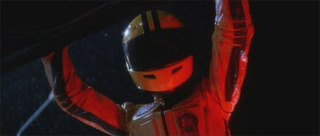 |
| Trunk Shot from Kill Bill |
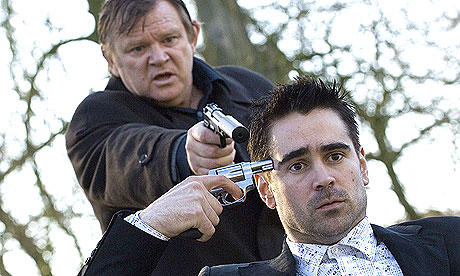 |
| In Bruges contains 2 main characters - an older, more experienced criminal and a rookie criminal, these are similar characters to the characters in our short film. |
 |
| Pitch Black Heist's dominant criminal is similar to the 'boss' in our film. The most important part of the film is where the heist takes place. Because the place where they're breaking in to has alarms that detect light, they have to perform the heist in darkness. Because of this, the heist is shot with no light. |
location shots and analysis
 |
| Place where main character will put his mask on and prepare before the shop robbery. |
 |
| Just outside the shop. It shows the surroundings of the shop and where they are going to be running away. |
 |
| The door which robbers enter the shop. |
 |
| Inside the shop. |
 |
| Inside the shop. |
 |
| The alley which they will escape through. |
 |
| The establishing shots- Setting |
 |
| The establishing shots- Setting |
 |
| The establishing shots- Setting |
 |
| The establishing shots- Setting |
Film Treatment
Hit and Miss is a short crime film set in northern England telling the story of 2 amateur, incompetent thieves who misplace some stolen money after a heist. The short film contains a gritty plot, along with an unexpected narrative twist, keeping the audience gripped until the end.
The film is targeted towards a British, young adult audience. In particular, I think the film would appeal mostly to an audience in Northern England, given that the characters are from there and a Northern English audience can relate to them and the setting.
Initially, the heist is proving to be a success, until the clumsy and unprofessional rookie shows the boss up. This theme continues into the escape sequence as the rookie mistakenly loses some of the money after he falls over.
The film then progresses to the aftermath of the heist at the thieves' safehouse. The boss is counting the money and to his dismay, he discovers that some of the money is missing. Fearing that his partner has ripped him off, the boss pulls a gun on the rookie after a heated argument. In return, the rookie pulls his gun on the boss. After a thrilling, tense standoff, the roles get reversed. The boss makes a rookie mistake, as he pulls the trigger to find that the gun isn't loaded. The camera then cuts to outside of the house with a gunshot going off from inside the house, leaving the audience guessing the outcome of the standoff, this is followed by the rookie fleeing the house. The camera then cuts inside, slowly revealing the corpse of the boss, along with the abandoned money.
The film then cuts to black, followed by the credits.
After this, there's a short clip of a stranger discovering the lost money.
This concludes a thrilling short film.
The film is targeted towards a British, young adult audience. In particular, I think the film would appeal mostly to an audience in Northern England, given that the characters are from there and a Northern English audience can relate to them and the setting.
Initially, the heist is proving to be a success, until the clumsy and unprofessional rookie shows the boss up. This theme continues into the escape sequence as the rookie mistakenly loses some of the money after he falls over.
The film then progresses to the aftermath of the heist at the thieves' safehouse. The boss is counting the money and to his dismay, he discovers that some of the money is missing. Fearing that his partner has ripped him off, the boss pulls a gun on the rookie after a heated argument. In return, the rookie pulls his gun on the boss. After a thrilling, tense standoff, the roles get reversed. The boss makes a rookie mistake, as he pulls the trigger to find that the gun isn't loaded. The camera then cuts to outside of the house with a gunshot going off from inside the house, leaving the audience guessing the outcome of the standoff, this is followed by the rookie fleeing the house. The camera then cuts inside, slowly revealing the corpse of the boss, along with the abandoned money.
The film then cuts to black, followed by the credits.
After this, there's a short clip of a stranger discovering the lost money.
This concludes a thrilling short film.
Friday, 8 November 2013
Research into viral advertising
 |
| This is a viral advert for district 9, it features the outline of a prawn (the alien race in the film) with the restricted logo over the top of it. While this advert isn't for a relevant film it is still a good example of viral advertising. this is because the district 9 advertisers placed the poster somewhere that people would go every day and would probably see the same thing day in and day out so by changing the usual setting it forces people to take notice, and if it peaks then the advert was successful. |
Teaser Film Poster - Hit and Miss
This was my initial idea for a teaser film poster that we could use to promote our film. The inspiration for this design came from minimalist film posters. I used Adobe Photoshop to create the poster and Adobe Illustrator to create the balaclava. I used the steel tongs font for the text at the bottom of the poster to make it look like a movie poster.
I think this poster works as a teaser poster because it does not reveal too much about the film, but just enough to let an audience know about the genre and type of film. To do this, I used an image of a balaclava because this is a symbolic image of heists.

Thursday, 7 November 2013
Film poster research.

Research into Film Poster
Poster Research

The poster is simple but effective. It has a film name in red on white/black background which makes it stand out. It has two clear images to represent the genre of the film. From looking at the poster audience can clearly find out that the genre is crime with gangster motive. It has the name of actors and producers on bottom of the poster which means they might not be as important as what actually happens in the movie.
This could show that the audience are more bothered about the movie than who produced it.
viral marketing in films
Viral Marketing in Films
 Shifty had a viral advertising done which was a email viral marketing where you could add friends face and made them out to be the drug dealer. It was simple but effective and brought lot of audience.
 However, this was banned as it was said to promote drug industry. This gives us a clear example of something that was effective but we need to think if its right and within the law.
For our movie we could copy this and have a frame a friend doing a shop robbery however, we need to be clear this is only a joke and not a serious matter.
However, this was banned as it was said to promote drug industry. This gives us a clear example of something that was effective but we need to think if its right and within the law.
For our movie we could copy this and have a frame a friend doing a shop robbery however, we need to be clear this is only a joke and not a serious matter.

Shifty had a viral advertising done which was a email viral marketing where you could add friends face and made them out to be the drug dealer. It was simple but effective and brought lot of audience.

However, this was banned as it was said to promote drug industry. This gives us a clear example of something that was effective but we need to think if its right and within the law.
For our movie we could copy this and have a frame a friend doing a shop robbery however, we need to be clear this is only a joke and not a serious matter.
Monday, 4 November 2013
Analysis of Short Film: Pitch Black Heist
IMAGES BROKEN. PLEASE SEE -
http://imgur.com/a/lpUzI#0
Pitch black heist is a short film on Film 4 directed by John Maclean, staring Michael Fassbender and Liam Cunningham. The short film is somewhat similar to our short film because it is based around a heist, it contains 2 main characters and both films contain a twist at the end.
The film is shot in black and white, creating a gritty atmosphere. I also think that its clever because it links to the film's title.
 |
| The first shot is an establishing shot of the inside of a warehouse. The film's title appears on screen, in black, bold text. |
 |
| The camera then tilts down into a birds eye shot, revealing a makeshift floor plan of a building made out of cardboard boxes. |
 |
| The camera then dollys through the floorplan, to show a box saying 'safe'. This helps to establish the 'end goal' of the film |
 |
| The audience is first introduced to the main character via a medium shot. This character is portrayed with his hood up and hands in his pockets. The body language from this suggests that the character is reluctant in expressing himself and being open. |
 |
| We are then introduced to the second character in the film, also shown in a mid shot. His personality is portrayed as being the opposite to Fassbender's character. Cunningham's character is extremely open, offering a handshake to Fassbender, although Fassbender rejects this. |
 |
| The third, minor character is then introduced, entering from a doorway. I think this longshot of the character helps to establish that Fassbender and Cunningham's relationship is somewhat distanced from Alex MacQueen's character. |
 |
| MacQueen then briefs the characters on the plans of the heist. In addition to this, Cunningham offers a cup of tea to both characters, reflecting his good-natured personality. Fassbender again rejects Cunningham, also reflecting his personality. |
 |
| In this scene, the characters are preparing for the heist whilst being blindfolded. This is because the place where the heist takes place has light sensors. The first glimpse of Cunningham's incompetence as a criminal is displayed as he frequently walks into the 'model' walls and furniture. Another important aspect of this shot, in my opinion, is the 'no smoking' sign in the background of the shot. I think this could be perceived as foreshadowing, although the audience do not know this at this stage. |
 |
| Whilst working on the 'safe' the Cunningham is trying to converse with Fassbender. Cunningham is romancing with the 'glory days', suggesting that he could be perceived as being 'washed up' or a 'has been'. Fassbender is more concerned with the task at hand. Also, This shot could symbolise that the 'safe' or goal is getting in the way of the two characters' relationships. |
  |
| A couple of establishing shots are then used to show where the heist takes place. It also shows a passage of time. |
 |
| The next scene takes place at a pub. This is a two-shot. Cunningham is laid back, whilst Fassbender is sat forward, suggesting apprehension. |
 |
| In this scene, we finally see Fassbender open up to his colleague about his life and past as they share a smoke. |
 |
| Proceeding this is a series of events where the characters bond. The characters sing together whilst playing a snooker. I felt that this scene brings some comic-relief after a previously dark and deep scene where Fassbender opens up about his past. |
 |
| In this scene, the characters are having an arm wrestle. An important aspect of this scene is that Fassbenders sly character is displayed. When agreeing on a countdown to start the arm wrestle, Fasbender tricks Cunningham and starts early. Midway through the arm wrestle, they get a call saying that the job is on. Fassbender eventually overpowers Cunnningham. |

 |
| A longshot shows the characters making their way to the place where the heist takes place. The characters are portrayed as being extremely jolly. |
 |
| My favourite shot in the movie is during the actual heist. Because the characters cannot reveal any light, the entire heist is shown in pitch black, with just sound being heard. This helps to create tension as the characters navigate their way to the safe. |
 |
| This is where the plot twist takes place. A cigarette is lit, revealing Fassbender's face in a close up shot and ultimately triggering the alarm. Fassbender's cold personality returns as he sets up Cunningham. |
 |
| In addition to this, a torch is shined upon Cunningham, showing his helpless figure. I also think the lighting shows Cunningham in white, contrasting with Fassbender who was show in the dark. Overall, I think Cunningham's character helps to make the audience feel sympathetic towards him. |
 |
| The closing shot is a long shot which reveals Fassbender entering the light from the darkness and escaping from the scene, leaving his partner behind. |
Subscribe to:
Comments (Atom)